
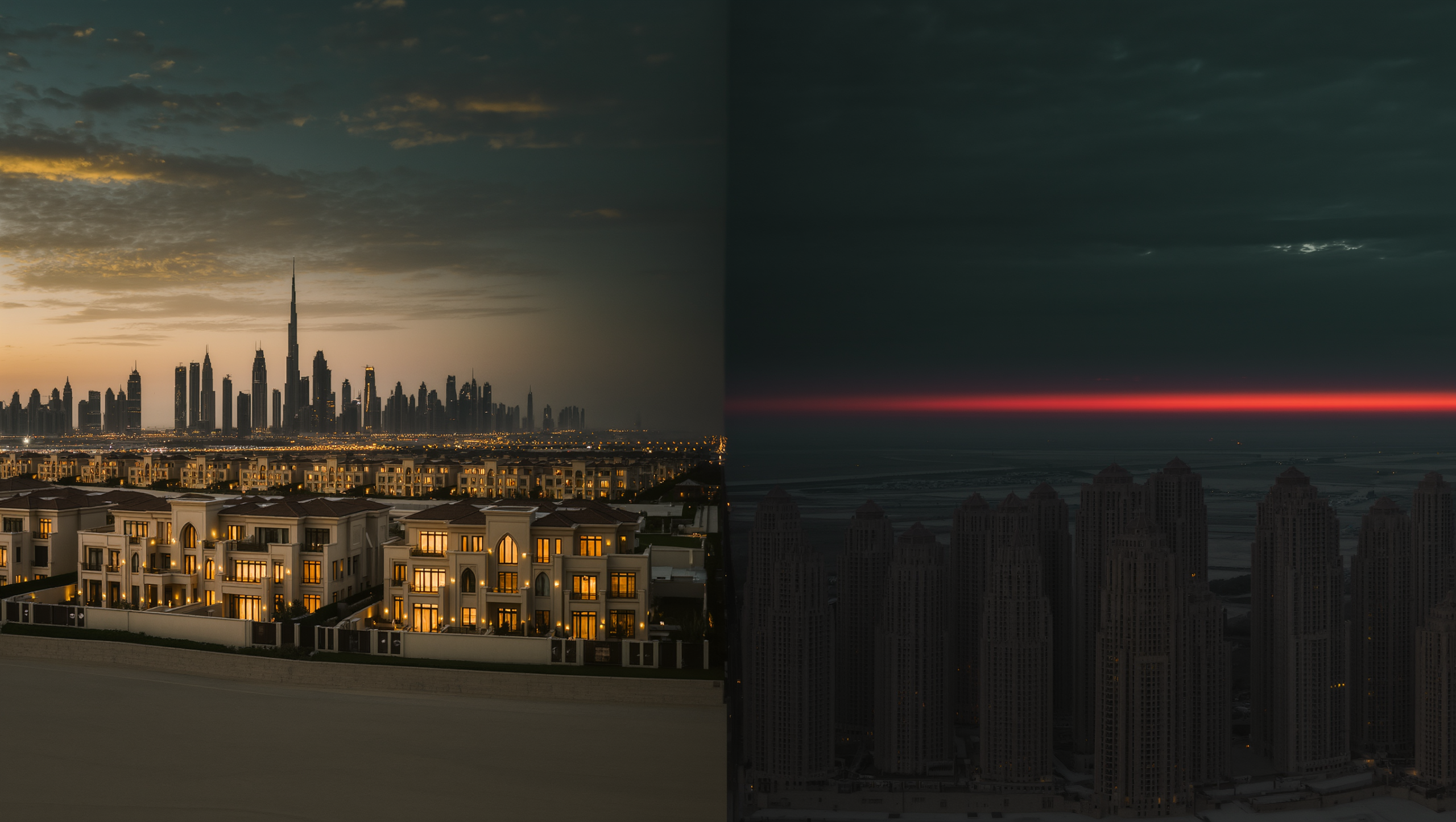
In March 2026, ValuStrat’s residential price index posted its first monthly decline since the post-pandemic recovery began. The index dropped 5.9% in a single month, to 229.2 points. Villas fell 5.8%, apartments 6.3%. Four months later, rental data caught up with capital values: average UAE rents declined 5.4% between January and April, and the residential segment specifically fell around 7%.
Local and international headlines split into two camps. One: “normal market correction.” The other: “the beginning of the end of the Dubai bubble.” Both camps are writing from the same numbers.
I work as a broker in Dubai, closing deals in exactly the communities these reports are covering. So let me break what is happening down into three layers — the data, the causes, and the scenarios — and say which is which.
THE DATA
Facts first, before interpretation.
The rental decline is uneven. In Q1 2026, Dubai signed 118,385 new rental contracts and 135,607 renewals, worth AED 32.2 billion combined. At the same time, contract cancellations dropped 25%. This matters: the rental market hasn’t frozen or collapsed — it is redistributing. People aren’t leaving. They are moving.
The decline is concentrated in specific location types. The sharpest softening is in mid-market apartment communities with heavy new supply — JVC, Arjan, Dubai Silicon Oasis, Sports City, Discovery Gardens. Premium villas, by contrast, are still appreciating: Palm Jumeirah, Jumeirah Golf Estates, Tilal Al Ghaf, District One are holding firm or rising.
On the capital side, the picture is parallel but more painful for specific communities. According to ValuStrat’s March data, Arabian Ranches Phase 2 fell 11.5% in a single month, and Dubai Hills Estate fell 10.8%. These are not the periphery — these are two of the most prestigious family-villa addresses in the city.
In premium apartment locations — Downtown, Palm Jumeirah, JLT — rents have declined around 15% year-on-year. The correction touches more than just the cheap districts. It has rolled into the top.
THE CAUSES
Now the why. It is important to separate three different processes that have layered onto each other to produce the appearance of a general decline.
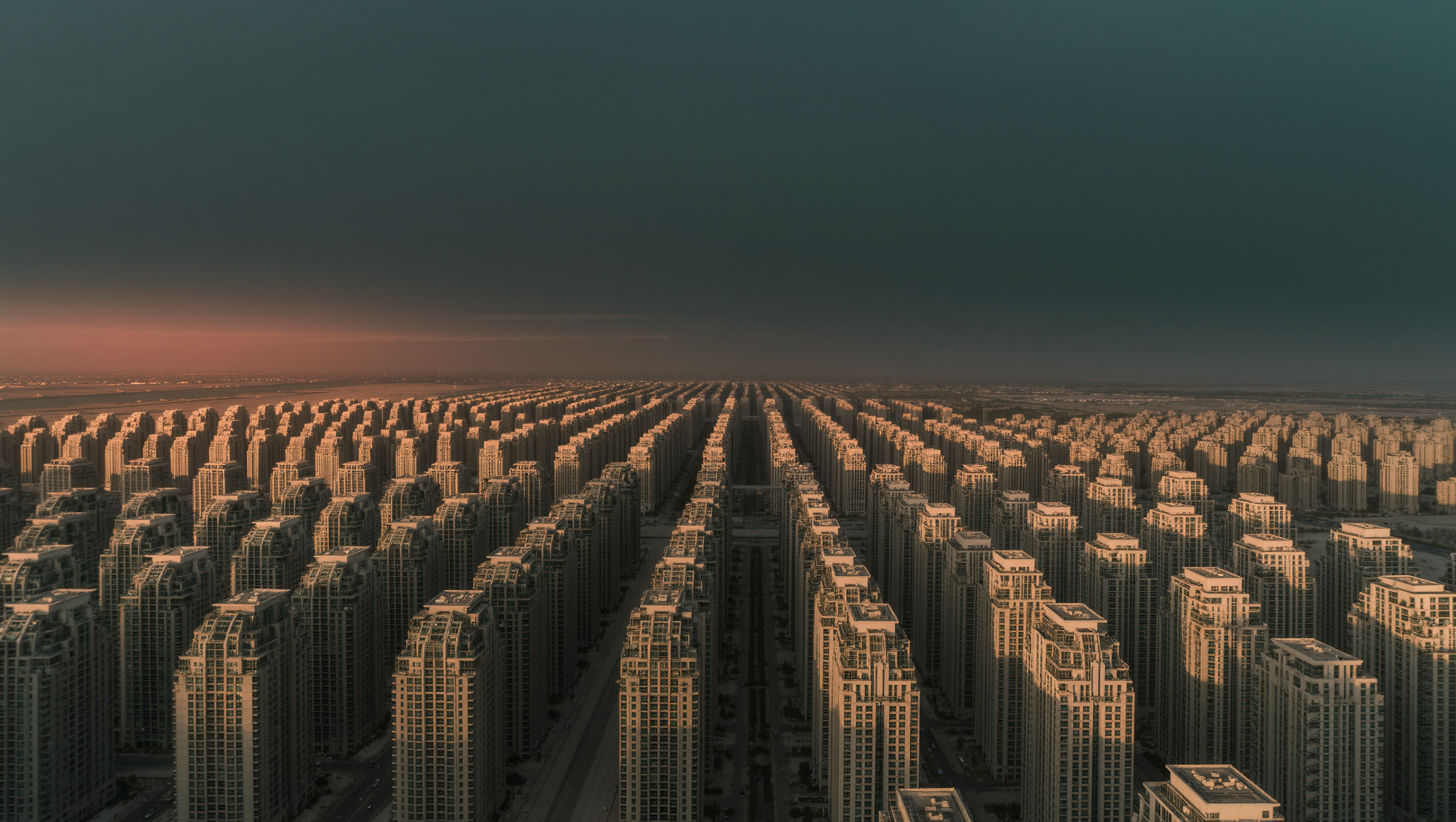
First, supply. Between 2022 and 2025, Dubai sold a colossal volume of off-plan inventory. Part of that inventory is now handing over. Forecasts suggest 200,000–300,000 new units will hit the market by 2028, with a significant portion arriving in 2026–2027. Inside certain masterplans, tens of thousands of units are handing over in the same window. When five thousand new units arrive in one district in one quarter, landlords start competing on rent. Rents fall mechanically. This is not a demand signal — it is supply arithmetic.
Second, demand structure. Between 2022 and 2024, Dubai absorbed a powerful wave of Russian, Indian, and Chinese buyers and tenants. That was a one-time migration tied to war, tax restructuring, and capital relocation. It does not repeat every year. Demand is still active, but it is no longer growing at 2022 speeds. When supply grows at double-digit rates and demand grows at single-digit rates, prices adjust.
Third, the external backdrop. AGBI explicitly flagged the regional conflict that hit the short horizon: new rental contracts dropped by more than a third in March, off-plan developers started offering discounts of up to 10%. This is a local shock, not structural, but it landed at the same moment as the accumulated supply overhang and amplified the effect.
So what we are watching is not one cause but three processes overlapping: accumulated new supply coming out of the ground, natural cooling of the migration wave, and geopolitical pressure. When three vectors line up, a market looks worse than its fundamentals.
CORRECTION OR CRISIS
Now to the actual question.
A crisis is when the market breaks structurally. Transactions collapse, banks stop lending, developers can’t deliver, off-plan defaults go mass-market, investors blow through stop-losses. That was 2009. That is not 2026.
In Q1 2026 Dubai recorded nearly 10,000 off-plan transactions, down only 2% year-on-year. Rental contracts are being signed at record volumes. Cancellations are down by a quarter. Capital values, after the March drop, remain 8.9% higher year-on-year. This is the arithmetic of a correction, not a crash.
A correction is when the market re-prices what it had over-priced on the way up. After three years of double-digit growth, prices and rents had reached levels where the end-user — the resident tenant earning a dirham salary — could no longer keep up. When a large volume of new supply arrives, that tenant finally has a choice for the first time in three years. And he picks the cheaper option. Landlords in the most overheated districts have to drop their asking rent. This is a healthy process, not a sick one.
In parallel, something important is happening: the market is splitting. Villas in the premium segment, limited-supply addresses (Palm, Jumeirah Bay, Emirates Hills, District One, Tilal Al Ghaf) continue to appreciate. Mass-market apartment segments with heavy supply are correcting. This is not the whole market falling. This is one market dividing into two.
WHAT EACH SIDE SHOULD DO
For tenants. You have the strongest negotiating position in three years. Ask for flexible payment terms, push back, look at brand-new buildings — landlords there are willing to grant concessions (free months, DEWA covered, fresh paint). In supply-heavy districts it is realistic to pull the rate down 8–12% versus 2024 levels.
For existing owners. If you hold a ready unit in a heavy-supply district and your mortgage is comfortable — hold. Rents are down, but several models project the bottom in 2027, after which supply will start being absorbed. Selling now, into the emotional dip, is almost always worse than patient waiting. If the mortgage is not comfortable, that is a different conversation.
For investors thinking about entering. This is the window that has been closed since 2021. Not in every community — in the right ones. Off-plan in supply-overheated districts is currently a risk. Ready inventory in the premium segment, at limited-supply addresses, with sustainable rental demand — that is a moment. The discounts and flexible payment plans developers are offering right now were unthinkable a year ago.
BOTTOM LINE
What is happening is a correction, not a crisis. But the correction is real, measurable, and ongoing. Anyone saying “everything is fine, nothing is falling” is ignoring the data. Anyone saying “the market is crashing” is ignoring the structure.
The single most important thing to understand about Dubai 2026: it has stopped being a market where everything goes up. It has become a market where you have to choose. That is harder than the last three years. It is also healthier

Join The Discussion