THE COMPANY THAT BUILT DUBAI’S COASTLINE
Nakheel is not a developer in the conventional sense. It is the company that physically created new land where there was previously only sea, and built entire residential masterplans on that land. Palm Jumeirah, The World Islands, Palm Jebel Ali, Dubai Islands, Jumeirah Lake Towers, Jumeirah Park, Jumeirah Islands, Discovery Gardens, International City, The Gardens, Al Furjan, Ibn Battuta Mall, Nakheel Mall, Dragon Mart, The Pointe, Centara Mirage Beach Resort — these are not separate projects. They are a single, coordinated 23-year programme of coastal reclamation, masterplanning, retail, hospitality, and residential delivery, all executed by one company under direct government direction.
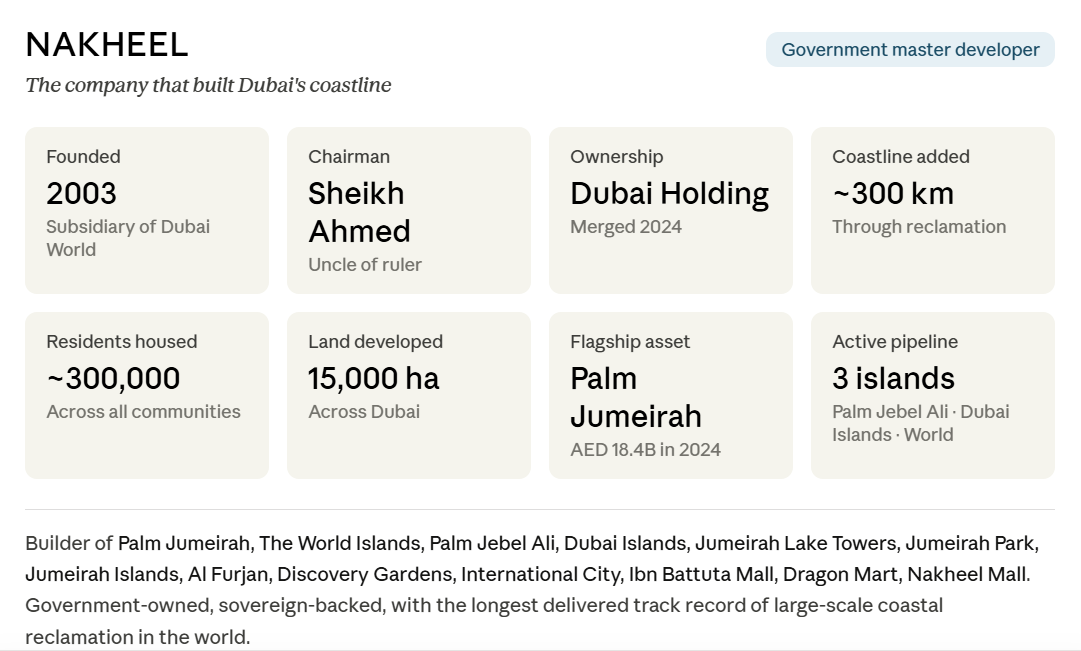
If Emaar built Dubai’s vertical icon — Burj Khalifa, Downtown Dubai, Dubai Marina towers — Nakheel built Dubai’s coastline. The company has added approximately 300 kilometres of new shoreline to the emirate through its reclamation projects. It currently houses nearly 300,000 residents across 15,000 hectares of developed land. By any operational measure, Nakheel is the most consequential master developer in the modern history of Dubai.
Founded in 2003 as a subsidiary of state-owned Dubai World, Nakheel rose alongside Dubai itself during the 2003–2008 boom, very nearly destroyed both itself and the emirate during the 2009 debt crisis, was restructured under direct government supervision, and emerged as a leaner, more disciplined entity. In March 2024, Nakheel was merged with Meraas under the Dubai Holding Real Estate umbrella, consolidating both companies under Dubai’s primary sovereign-linked development conglomerate. The Nakheel brand survived the merger and continues to be used for the master-community and island-reclamation projects that define the company’s identity.
The single most important fact about Nakheel for a buyer in 2026 is that this is the developer with the longest delivered track record of large-scale coastal masterplanning in the world. Palm Jumeirah is its proof of concept — a fully built, fully populated, twenty-year-old artificial island that now commands AED 12 billion in annual transaction volume. Dubai Islands and Palm Jebel Ali are its sequels. A buyer entering a Nakheel masterplan today is entering the same operating model that produced Palm Jumeirah, with the same master developer, under stronger sovereign backing than at any point in the company’s history.
LEADERSHIP — INSTITUTIONAL, NOT FOUNDER-LED
Nakheel is not a founder-led company. Unlike Emaar (Mohamed Alabbar) or Sobha (PNC Menon), Nakheel was created as a sovereign-linked development vehicle from inception. Its leadership has always been institutional and government-appointed.
The Chairman of Nakheel is HH SHEIKH AHMED BIN SAEED AL MAKTOUM — uncle of the ruler of Dubai, born 1958, and one of the most powerful business figures in the UAE. Sheikh Ahmed simultaneously chairs and runs Emirates Group (Emirates Airline, dnata), serves as President of the Dubai Civil Aviation Authority, chairs Dubai World, and chairs Meraas. His appointment to lead the consolidated Dubai Holding Real Estate entity in 2024 was the most significant single act of corporate consolidation in Dubai’s modern real estate history. Nakheel, Meraas, Dubai Properties, Dubai Estates — all now sit under one member of the ruling family.
The CEO of Dubai Holding Real Estate (the parent entity that now houses Nakheel) is KHALID AL MALIK, a longtime Dubai real estate executive who has served in senior roles across the Dubai property sector for over two decades. He is the operational head responsible for the integrated company.
For a buyer, what this means is straightforward: Nakheel does not have a charismatic founder you can put on a thumbnail. It has something more useful — direct institutional alignment with the ruling family, government-grade balance sheet backing, and a leadership chain that does not change with corporate cycles.
HISTORICAL MILESTONES
The history of Nakheel is the history of modern Dubai. The two cannot be separated.
2000–2001 — Nakheel is established as part of Dubai World, the state-owned investment conglomerate, with a mandate to deliver large-scale waterfront and master-community development. Originally founded as Nakheel LLC.
2001 — Sheikh Mohammed bin Rashid Al Maktoum publicly announces the Palm Jumeirah project. Reclamation work begins almost immediately.
2003 — Nakheel formally incorporated as a separate entity. The Gardens residential community (in Jebel Ali) is among the first masterplans delivered.
2003–2006 — Construction of Palm Jumeirah. Approximately 94 million cubic metres of sand and 7 million tonnes of rock used. Total construction cost approximately USD 12 billion.
2003 — Launch of The World Islands — 300 artificial islands shaped like a map of the world, off the coast of Dubai. The most ambitious reclamation project ever attempted at the time.
2005–2007 — Launch of Jumeirah Lake Towers, Jumeirah Islands, Jumeirah Park, Discovery Gardens, International City. Within four years, Nakheel becomes the largest master developer in Dubai by total residential land delivered.
2006 — Palm Jumeirah officially opens. First residents move in 2007.
2008 — Opening of Ibn Battuta Mall — at the time, one of the largest themed shopping centres in the world.
2008–2009 — Global financial crisis. Nakheel becomes the symbol of Dubai’s debt problem when it cannot meet the AED 26 billion sukuk repayment in November 2009. The crisis triggers Abu Dhabi’s emergency USD 10 billion bailout of Dubai. Multiple projects pause indefinitely, including Palm Jebel Ali, Palm Deira (Dubai Islands), The Universe, The Dubai Waterfront. The company is restructured under direct government supervision.
2010–2015 — Rebuilding phase. Focus on completing committed Palm Jumeirah inventory and delivering existing communities. New launches limited.
2017 — Launch of Como Residences on Palm Jumeirah — Nakheel’s return to high-end residential.
2022 — Major relaunch. Dubai Islands (the rebranded Palm Deira / Deira Islands) is officially launched with a new masterplan. Palm Beach Towers on Palm Jumeirah completes.
2023 — Palm Jebel Ali officially relaunched after 15 years of dormancy. New masterplan unveiled, new villa launches begin.
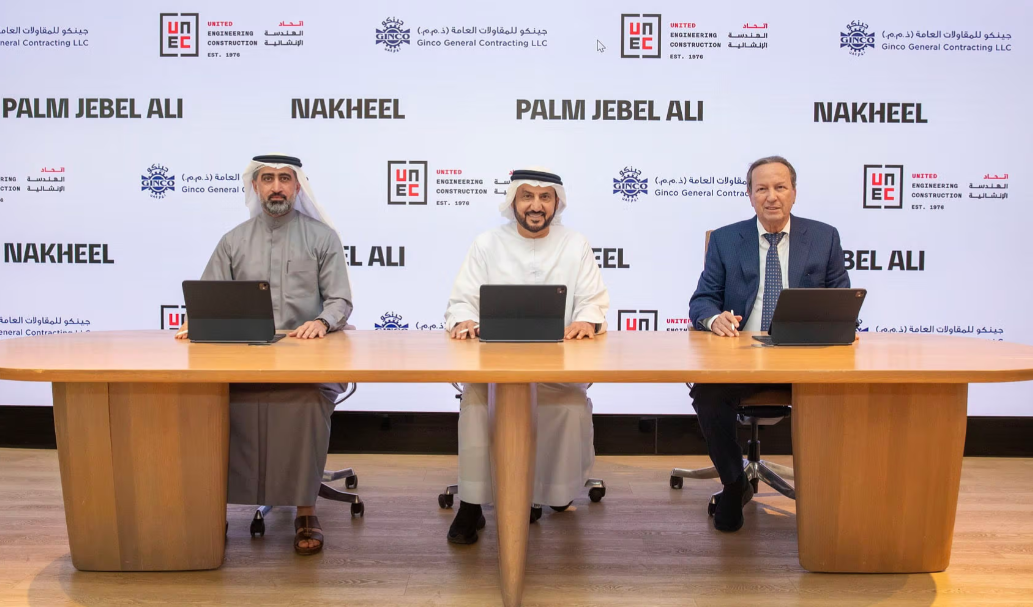
March 2024 — Nakheel and Meraas merged under Dubai Holding Real Estate. Sheikh Ahmed bin Saeed Al Maktoum confirmed as Chairman of the combined entity.
2024–2025 — Active launch cycle: Bay Villas, Bay Grove Residences, Bay Estate on Dubai Islands; Palm Jebel Ali villa launches (Beach Collection, Coral Collection); Como Residences nearing handover.
2026 — Active construction across Dubai Islands and Palm Jebel Ali. AED 527 million infrastructure contract awarded for Island B at Dubai Islands. AED 3.5 billion in villa contracts awarded for Palm Jebel Ali. The company is now operating at the highest delivery cadence in its history.
ICONIC PROJECTS
Nakheel’s iconic projects are not buildings. They are entire islands and entire neighbourhoods. The signature is reclamation and masterplanning at a scale no other developer in the world has matched.
PALM JUMEIRAH — the flagship. The most internationally recognised piece of Dubai real estate. Built between 2001 and 2006. Population approximately 80,000 residents. Recorded AED 18.4 billion in transactions in 2024 alone. Twenty years on, still the benchmark against which every Dubai luxury address is measured.
THE WORLD ISLANDS — 300 artificial islands shaped like a world map, off the coast of Dubai. Largely undeveloped, with a few private island plots sold and one or two operational hotels. The most ambitious and least completed Nakheel project.
PALM JEBEL ALI — the second palm. Launched 2002, halted 2008, dormant for 15 years, officially relaunched in 2023. New masterplan with frond villas, signature mansions, and crescent resorts. Approximately 50% larger than Palm Jumeirah. Verified 2026 pricing: 5-bed villas from AED 18M, 7-bed villas up to AED 43M. First handovers targeted Q4 2027 to Q4 2028.
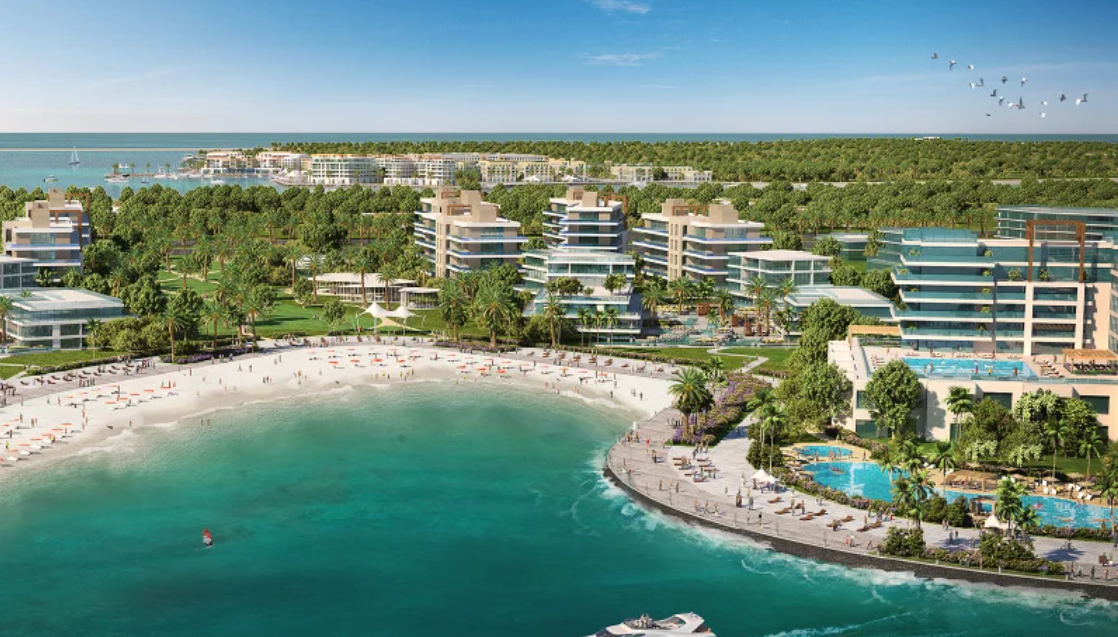
DUBAI ISLANDS — the rebrand of Deira Islands. Five interconnected islands totalling 18.6 km², adding 57 km of coastline. Will house 231,000 residents across 49,000 homes. Active construction. First handovers Q4 2026.
JUMEIRAH LAKE TOWERS (JLT) — Nakheel masterplan of 80 high-rise towers around three artificial lakes, between Sheikh Zayed Road and the Marina. Fully built, mature resale and rental market. One of Dubai’s strongest mid-market apartment communities.
JUMEIRAH ISLANDS / JUMEIRAH PARK — gated villa communities with internal lakes and landscaped streets. Premium family-villa market, mature resale.
INTERNATIONAL CITY — themed mid-market apartment community organised by country districts (China, Russia, Spain, France, Italy, Greece). Dubai’s largest single mid-market residential community by unit count.
DISCOVERY GARDENS / THE GARDENS — early Nakheel mid-market apartment masterplans in Jebel Ali. Mature, high-yield rental communities.
AL FURJAN — gated townhouse and villa community in Jebel Ali. 560 hectares, approximately 26,000 residents.
IBN BATTUTA MALL — themed shopping mall divided into six courts based on the travels of Ibn Battuta. Connected to the Dubai Metro Red Line.
DRAGON MART — wholesale and retail destination focused on Chinese goods. Dragon Mart 1 (2004), Dragon Mart 2 (2015). The largest Chinese trading hub outside China.
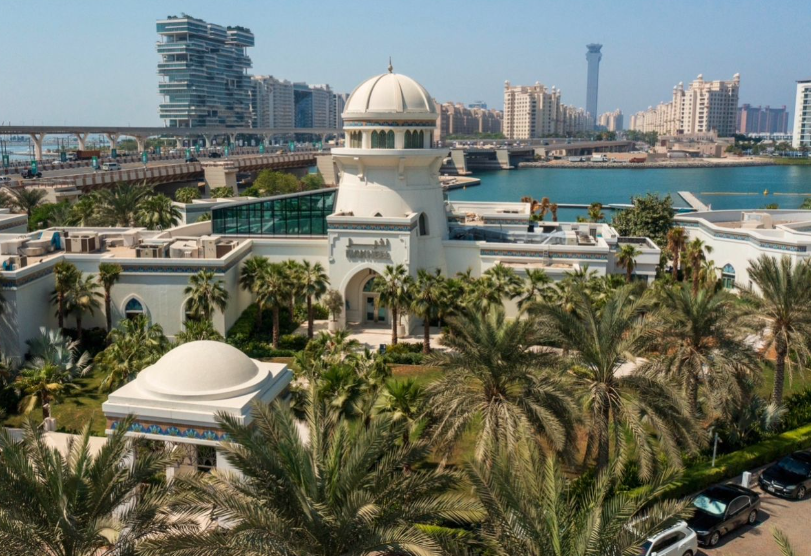
NAKHEEL MALL (Palm Jumeirah) — anchor retail asset on the trunk of Palm Jumeirah. Opened 2019.
THE POINTE — waterfront retail and dining destination at the tip of Palm Jumeirah’s trunk, facing Atlantis. Opened 2019.
CENTARA MIRAGE BEACH RESORT and HOTEL RIU DUBAI — first two hotels operational on Dubai Islands.
RESIDENTIAL COMMUNITIES
Where Nakheel actually sells inventory to property buyers in 2026 — by tier.
ULTRA-LUXURY TIER (Palm Jumeirah, Palm Jebel Ali):
COMO RESIDENCES — 76-storey ultra-luxury tower on the trunk of Palm Jumeirah. Handover 2027.
PALM BEACH TOWERS — three towers on Palm Jumeirah’s west crescent. Completed 2022–2023.
PALM JEBEL ALI VILLAS — Beach Collection, Coral Collection. Frond villas with private beach access.
PREMIUM TIER (Dubai Islands, Palm Jumeirah trunk):
BAY VILLAS — villa community on Dubai Islands. Handover Q2 2027.
BAY GROVE RESIDENCES — residential apartments on Dubai Islands. Handover 2029.
BAY ESTATE — ultra-luxury villas on Island E (Elite Island), Dubai Islands. Launched March 2026. AED 4.7M to AED 40M.
MID-PREMIUM TIER:
JEBEL ALI VILLAGE — gated 4 and 5-bedroom villa community. Handover 2024–2025.
TILAL AL FURJAN — villa expansion within the Al Furjan masterplan.
ESTABLISHED MID-MARKET TIER:
JLT, Jumeirah Park, Jumeirah Islands, Al Furjan, Discovery Gardens, International City, The Gardens — all delivered communities. Available exclusively in resale market.
WHY NAKHEEL PRICING IS DIFFERENT
Three structural reasons Nakheel inventory prices and resells differently from other developers.
THE PALM JUMEIRAH PROOF POINT. No other Dubai developer has delivered a fully built, fully populated, multi-cycle-tested premium masterplan with the global brand recognition of Palm Jumeirah. When Nakheel launches Dubai Islands or Palm Jebel Ali, the implicit pitch is “this is what Palm Jumeirah looked like in 2003.” That historical comparison is not marketing — it is operational track record. Sophisticated buyers price it accordingly.
GOVERNMENT BACKING. Nakheel is government-owned through Dubai Holding. The 2009 crisis was the stress test — and the lesson the market took from it is that Nakheel is too important to Dubai to be allowed to fail. Sovereign-grade delivery risk is structurally lower than private developer risk.
MASTERPLAN ECONOMICS. Nakheel does not just sell apartments. It sells positions inside masterplans that Nakheel itself controls. The infrastructure, the retail anchors, the hotels, the marinas, the public realm — all built by the same entity, on the same coordinated timeline. This is the same model that made Palm Jumeirah valuable over twenty years. Buyers entering Dubai Islands or Palm Jebel Ali today are buying into the same operating model.
The trade-off is straightforward — Nakheel masterplans are long-horizon plays. They take years to mature, infrastructure precedes amenities, amenities precede population, and population precedes the resale liquidity that defines a finished community. Short-horizon flips are difficult inside an early-stage Nakheel masterplan. Multi-cycle holds are where the model rewards.
WHAT THIS MEANS FOR A 2026 BUYER
Nakheel is the developer for buyers with the longest horizons. The brand is not the fastest, not the cheapest, not the most luxurious — Emaar moves more inventory, Damac launches more product per year, Sobha builds to a higher finishing standard, Meraas runs more curated lifestyle districts. What Nakheel uniquely owns is the masterplan-at-scale game. Palm Jumeirah is the proof. Dubai Islands and Palm Jebel Ali are the sequels.
The right Nakheel conversation with a client is not “Nakheel or not Nakheel.” It is which Nakheel masterplan, at which stage of maturity:
PALM JUMEIRAH — for fully built, mature, brand-recognition exposure.
DUBAI ISLANDS — for early-stage Nakheel masterplan entry at pre-maturity pricing.
PALM JEBEL ALI — for the longest-horizon Nakheel bet, with the largest potential asymmetry but the longest delivery wait.
Established communities (JLT, Jumeirah Park, Al Furjan, Discovery Gardens) — for income-focused investors and end-users buying into delivered Nakheel infrastructure.
Each tier rewards a different buyer profile. The buyer who treats Nakheel as one product is the buyer who picks the wrong masterplan.
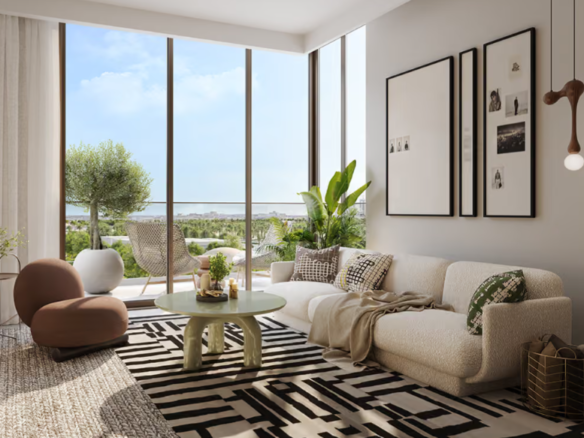
VIDA RESIDENCES CLUB POINT | AED 380K BELOW ORIGINAL PRICE | DISTRESS
Vida Residence Club Point Site Office - Dubai - United Arab EmiratesEXCERPT High-floor 2-bedroom at Vida Residences Club, Dubai Hills Estate — Emaar's...

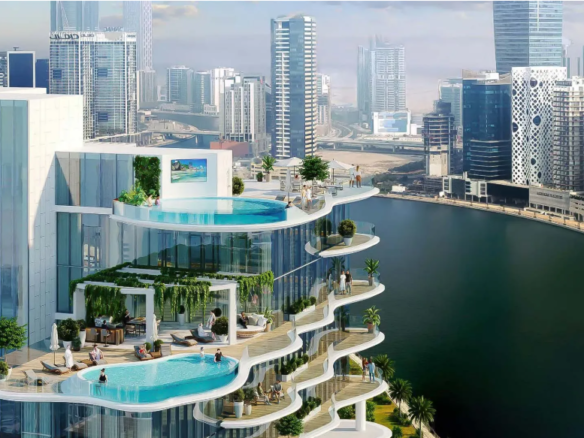
Corner | Chic Tower, Business Bay | 500k below OP
CHIC TOWER de GRISOGONO - Dubai - United Arab EmiratesRare below-market corner 2BR in Chic Tower, Business Bay — 1,574 sq....
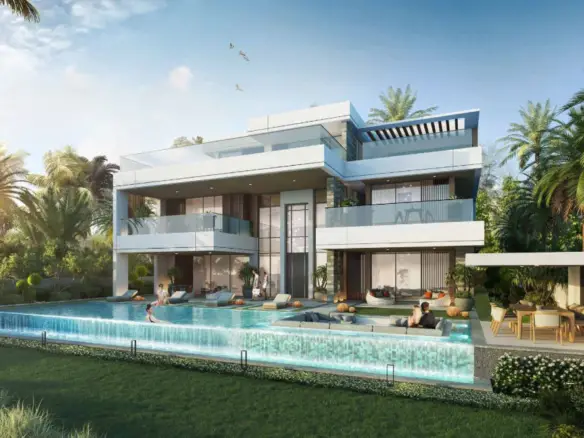
6 Bedroom Standalone Vill | Morocco Cluster, DAMAC Lagoons | -10,7% below OP
Morocco Cluster - Dubai - United Arab EmiratesStandalone 6-bedroom villa on the lagoon in DAMAC Lagoons' Morocco cluster —...
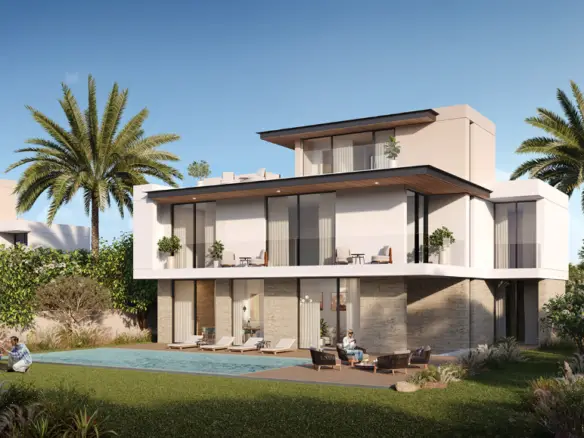
Distressed | Corner Plot | Biggest Plot Facing the Central Park | Farm Gardens 2 | Th Valley
Farm Gardens - Dubai - United Arab EmiratesDistressed sale in Farm Gardens 2, The Valley — Unit 178, a...
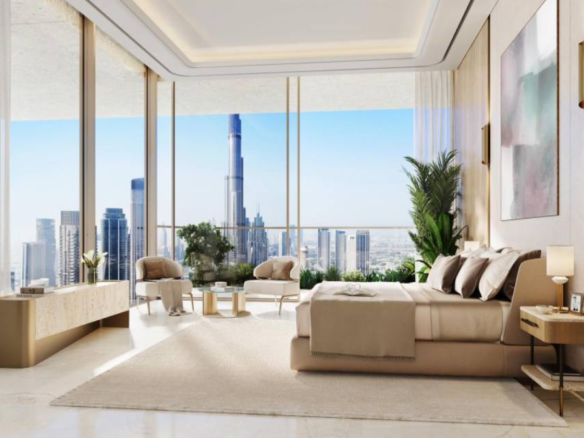
FAIRMONT RESIDENCES SOLARA TOWER | 2-BED + MAID | FURNISHED | BURJ VIEW | ~18% BELOW OP
Solara - Sheikh Mohammed bin Rashid Boulevard - Dubai - United Arab EmiratesDistress resale in Fairmont Residences Solara Tower, Downtown Dubai. A fully furnished...
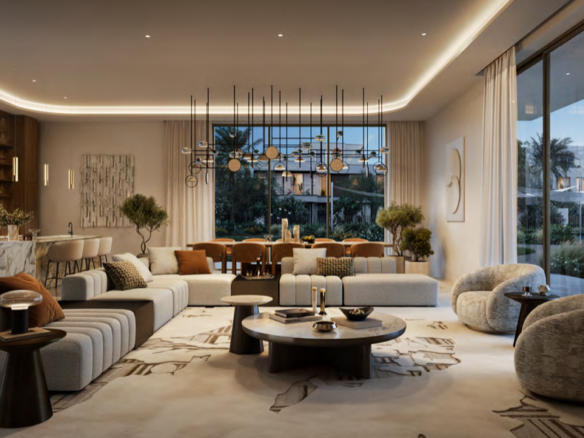
5-BR VILLA | ADDRESS VILLAS TIERRA, THE OASIS | BEACH & LAGOON | – 9,1% BELOW OP
The Oasis by Emaar - Dubai - United Arab EmiratesOriginal-buyer exit in Address Villas Tierra at The Oasis by Emaar. Address-branded...
Let's get in touch - I reply in 24 hrs