WHAT IS OQOOD?
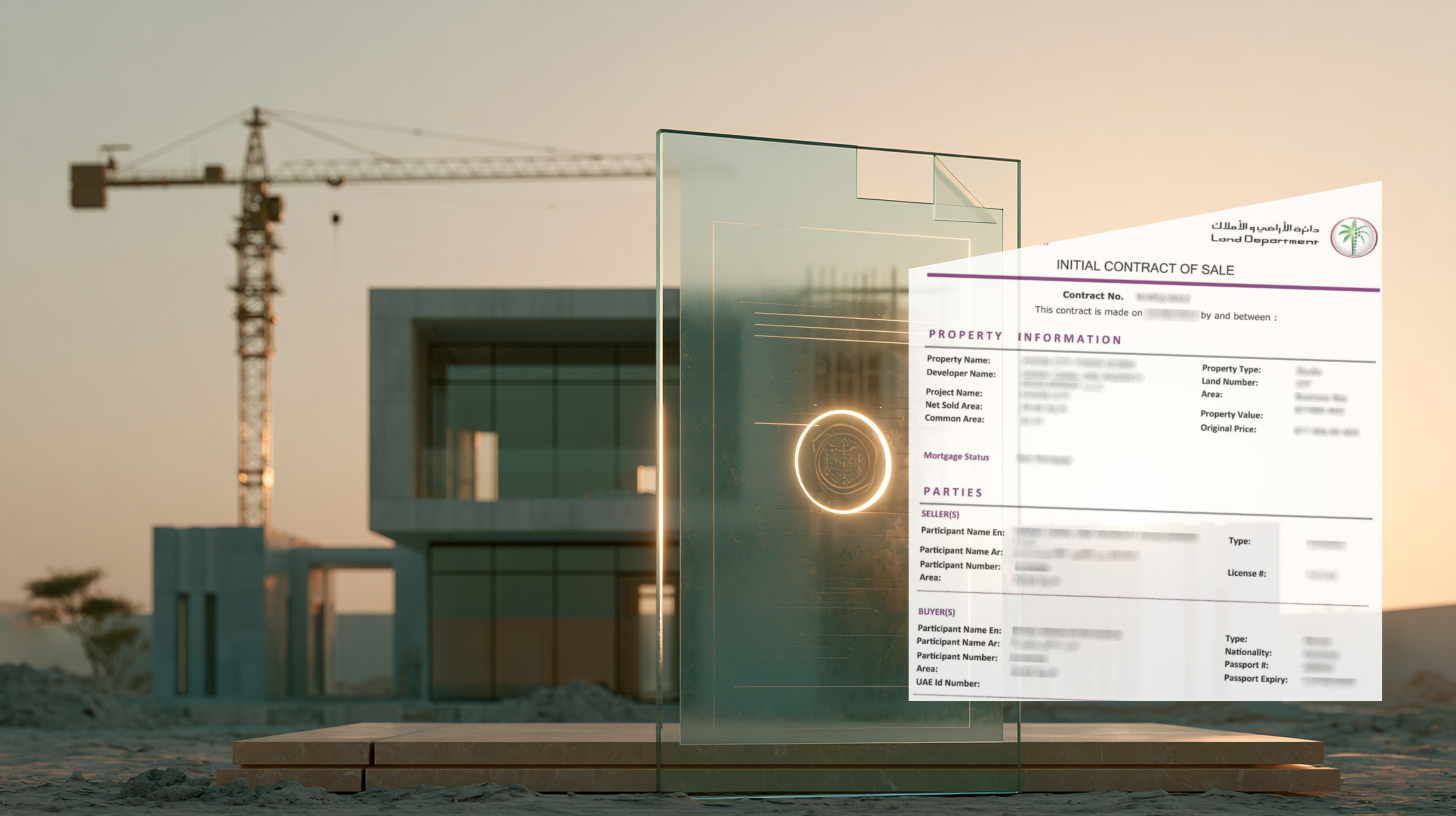
Oqood (Arabic for “contracts”) is Dubai’s interim registration system for off-plan property. When you buy a unit that has not yet been completed, there is no title deed to transfer — the property legally does not exist yet. Oqood fills that gap: it records your purchase agreement with the Dubai Land Department and creates an official, state-registered record that you — not the developer, not another buyer — hold the contractual right to that specific unit.
The system is administered by the Dubai Land Department (DLD) and applies to every off-plan sale in Dubai, whether you buy directly from a developer or take over someone else’s contract in a resale. If you own off-plan property in Dubai and it is not registered in Oqood, you have a serious problem — more on that below.
WHY IT EXISTS
Oqood was introduced under Law No. 13 of 2008, part of the regulatory package Dubai built after the first off-plan boom exposed how vulnerable buyers were. Before interim registration, an unscrupulous developer could sell the same unit twice, mortgage a building full of sold units, or simply deny a purchase ever happened. The buyer’s only evidence was a private contract.
Registration in Oqood makes the sale a matter of public record. The unit is tied to your name in the DLD’s system, it cannot be sold to a second buyer, and the developer cannot quietly encumber it. Combined with the escrow account regime under Law No. 8 of 2007, it forms the core of Dubai’s off-plan buyer protection.
HOW REGISTRATION WORKS
After you sign the sale and purchase agreement, the developer is legally obligated to register the sale in Oqood. The standard fee is 4% of the purchase price — the same rate as the DLD transfer fee on ready property — plus a small administrative charge. Who pays it is set by your contract: in most primary sales the buyer pays, though some developers absorb it as a promotion.
Once registered, you receive an Oqood certificate. Treat it the way you would treat a title deed: it is your proof of ownership rights until the property completes. At handover, once the developer obtains the building completion certificate and you have settled the payment schedule, the Oqood registration converts into a full title deed in your name.
OQOOD VS TITLE DEED
The distinction matters. A title deed records ownership of a completed, physically existing property. Oqood records contractual rights to a future property. Your protection under Oqood is real, but it is protection of a claim, not of bricks — which is why the health of the project itself (construction status, escrow account, developer track record) remains part of your risk in a way it no longer is once a title deed exists.
WHY THIS MATTERS FOR BELOW-MARKET BUYERS
Most below-market opportunities in the off-plan segment are resales: an original buyer exits before handover, often at or below the original contract price. In these deals, Oqood is not paperwork — it is the deal.
First, verification. Before you transfer a dirham, the seller’s Oqood registration should be checked. It confirms the seller actually holds the rights they are selling, shows the registered contract value, and confirms the unit is free of registered claims. A seller who cannot produce an Oqood certificate, or whose unit does not appear in the DLD’s records, is not a seller — whatever their SPA says.
Second, the paid-to-date position. An off-plan resale is a transfer of a contract, including its payment schedule. You need the developer’s statement of what has been paid against the Oqood-registered price, because you are buying the paid equity plus the obligation to pay the rest. The discount only means something once you know the true remaining liability.
Third, the transfer itself. An off-plan resale requires the developer’s No Objection Certificate and re-registration of the Oqood into the buyer’s name. Developers charge an NOC fee and some impose conditions — a minimum percentage paid before they allow assignment is common. Factor both into the deal economics before committing.
THE RED FLAGS
The absence or failure of Oqood registration is one of the most reliable early warnings in Dubai’s off-plan market. Patterns we have seen repeatedly in troubled projects:
- The developer collects payments but delays or avoids registering sales in Oqood, leaving buyers with nothing but a private contract
- Payments are directed outside the project’s escrow account — an Oqood check and an escrow check together expose this quickly
- Guaranteed-return schemes sell “units” that were never registered with the DLD at all
- A reseller offers a unit at a tempting discount but cannot produce the Oqood certificate or a developer statement
Each of these has featured in real cases that ended in RERA complaints, frozen projects, or buyers queuing in liquidation proceedings. The registration check costs nothing and takes minutes. Skipping it has cost buyers everything.
HOW TO VERIFY
Verification runs through the Dubai Land Department: the Dubai REST app and DLD’s official channels allow you to confirm a project’s registration status, its escrow account details, and the completion percentage reported by RERA. For a specific unit, the seller’s Oqood certificate can be validated against DLD records, and the developer’s statement of account confirms the paid position. In any transaction we handle, this verification is completed before deposit — not after.
THE BOTTOM LINE
Oqood is the difference between owning rights to an off-plan unit and merely holding a developer’s promise. For buyers hunting below-market deals in the off-plan resale segment — where the best discounts live — it is the first document to check, the mechanism through which the transfer happens, and the earliest warning system when something is wrong with a project. A genuine below-market deal survives an Oqood check. A fake one rarely does.


Join The Discussion