
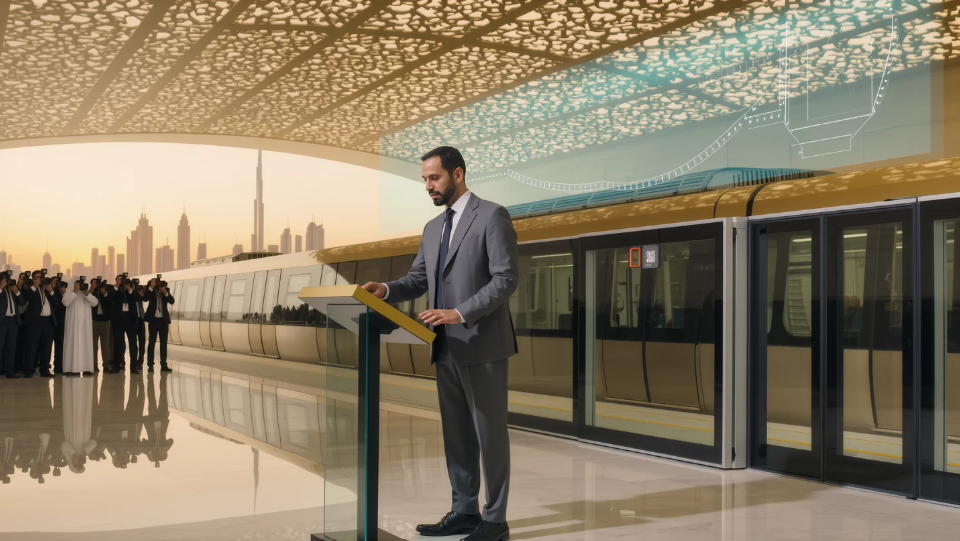
Every broker in Dubai is currently saying the same thing: buy near a future metro station and your property value will grow.
The Roads and Transport Authority has gone as far as putting a number on it — Director General Mattar Al Tayer stated in November 2025 that the Blue Line is anticipated to boost land and property values by up to 25 per cent around metro stations.
That is an official government claim. It is also not supported by a single piece of peer-reviewed research on metro proximity and property values in car-dependent cities — including studies that looked specifically at cities with climate, density, and culture profiles closer to Dubai than London or Tokyo.
THE GLOBAL PROBLEM WITH THE METRO ARGUMENT
The argument brokers make usually points to London, Singapore, or New York — cities where metro proximity correlates with high prices. But correlation is not causation, and the academic literature on this question is far less flattering to the metro narrative than the brokerage industry would like.
A 2018 study on Xi’an, China found that properties immediately adjacent to metro stations had the lowest price uplift of any distance band — noise, traffic, and congestion outweighed the convenience the closer you got. A study on Thessaloniki, Greece found residential values near stations dropped by up to 15 percent while the metro line was still under construction — prices fell because of a metro that did not even exist yet. Research on Shiraz, Iran using a hedonic price model and real transaction data found that metro proximity had a statistically insignificant effect on apartment prices. Effectively zero.
A 2014 study on Phoenix, Arizona — a car-dependent desert city, the closest American analogue to Dubai’s climate and urban form — found a negative effect of light rail proximity on single-family home values. The same research noted that park-and-ride facilities, where people drive to the station rather than walk, significantly reduced whatever benefit existed. The moment a tenant needs a car to reach the metro, the entire logic of transit-driven value collapses.
Even in Manhattan — one of the most expensive and most walkable real estate markets on earth — a 2024 study on the Second Avenue subway extension introduced a term for what the researchers found: inverse premiumization. Proximity to the new stations did not uniformly translate into increased housing prices. If transit-driven appreciation doesn’t reliably work in Manhattan, it deserves serious scrutiny everywhere else.
THE OTTAWA STUDY THAT BROKERS WON’T QUOTE
A 2012 study on Ottawa’s O-Train system, published in the Journal of Public Transportation, stated the relationship between urban rail stations and housing prices is far more complex than is commonly believed — and found some neighborhoods showed negative price dynamics after the line opened.
This is the honest academic consensus: metro proximity is one input among many, and in several documented cases it has had a neutral or negative effect on property values. The certainty with which brokers present the opposite is not supported by the evidence they would need to make that case.
REVERSE CAUSATION: METRO FOLLOWS VALUE, NOT THE OTHER WAY AROUND
The deeper problem with the metro narrative is causal direction. A landmark 2013 study by David Chatman, published in the Journal of the American Planning Association, asked a pointed question: does transit-oriented development even need the transit? His finding: rail access does little to explain lower auto ownership and use near stations. Housing type and tenure, local density, bus service, and parking availability play a much more important role than the train itself.
Paris is the clearest historical illustration. Le Marais, Saint-Germain, and Montmartre were expensive neighbourhoods since the 1850s. The Paris Metro opened in 1900 — fifty years later. It was built to connect places that already mattered. The metro followed the value. It did not create it.
Dubai Marina tells the same story locally. The Marina tram opened in 2014, years after the community had already become one of Dubai’s most valuable residential addresses. The tram was not built to create value — it was built because the Marina had become so dense and so popular that traffic became a genuine problem. Infrastructure followed success. And the buildings closest to the tram stations today are, by a wide margin, the cheapest stock in the community — filled with room-share and partition listings, not the premium product the metro proximity argument predicts.
WHY THIS MATTERS MORE IN DUBAI THAN ALMOST ANYWHERE
Two factors make the metro premium argument weaker here than in the cities brokers like to reference.
First, Dubai is extreme heat for roughly eight months of the year. The walkability that makes transit proximity valuable in London or Tokyo — a comfortable ten-minute walk to the station — does not exist here for most of the year. Residents drive to the station, park, and lose the door-to-door convenience that justifies a transit premium elsewhere.
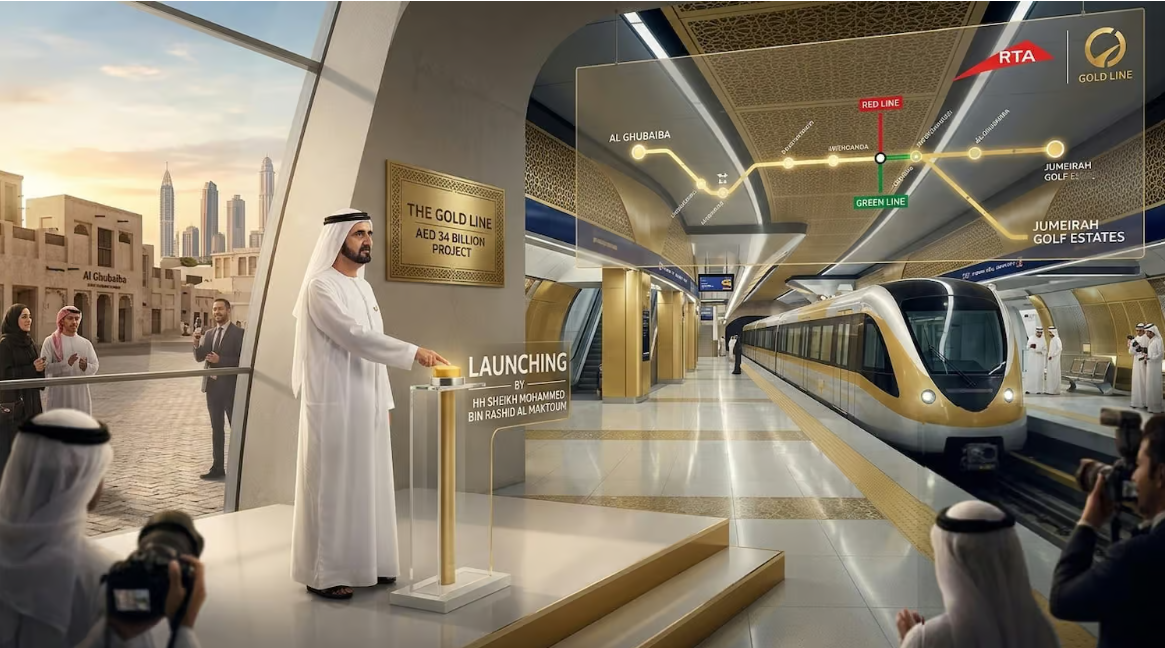
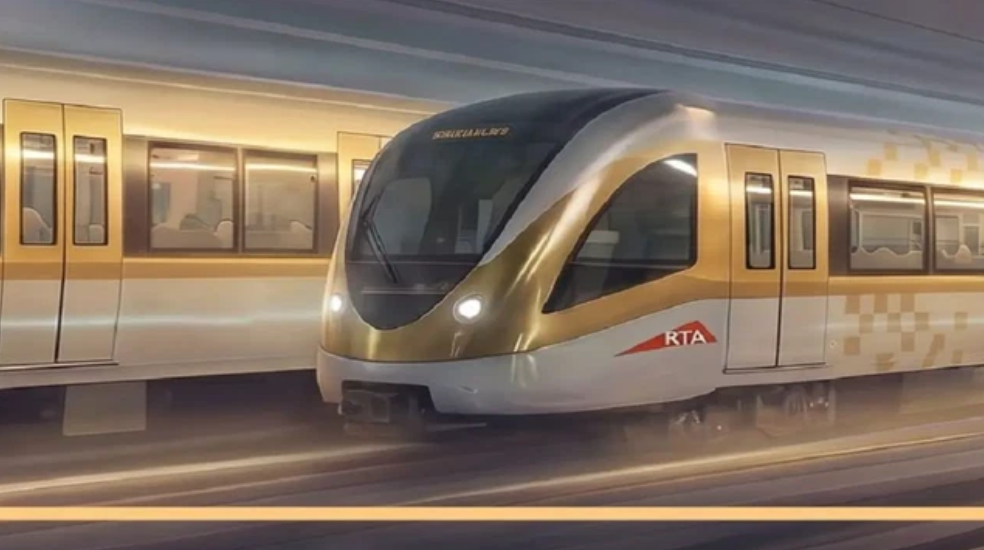
Second, Dubai’s metro network is genuinely small. Two lines, with the Gold Line approved in April 2026 and targeted for 2032 completion as a third. London has twelve lines. Tokyo has thirteen. A single station on the edge of a 2,700-acre community like Dubai Hills is not network connectivity — it is a mall entrance with a metro badge attached.
THE PATTERN TO WATCH
Within weeks of the Gold Line announcement, developers along the corridor raised prices. Buyers signing today are paying 2032 valuations in 2026, for a project with a target completion date and a track record — the Blue Line was first discussed in 2012 and still does not exist.
The full breakdown — six cities, eight academic sources, and the Dubai-specific mechanics of why this narrative persists — is in the video below.
If a metro-driven growth story is the reason you are considering a specific off-plan launch, run the numbers on the secondary market alternative first. The below-market deals on this site are listed below.
Join The Discussion